Articles, Website

WordPress Security in 2026: Why AI Is Driving More WordPress Hacks (and How to Protect Your Site)

If it feels like you’re hearing about WordPress hacks more often, you’re right. Attackers now use AI to find weak spots in websites faster than ever. Once a flaw is made public, they can have tools attacking thousands of sites within hours.

WordPress runs a huge share of the web, including many small business websites here in the Okanagan and across Canada. That popularity makes it a target. The good news is that most hacks are preventable. This guide covers what’s changed, where the risks are, and the steps that keep a site secure.

Is WordPress Secure?

Short answer: yes, when it’s built and maintained properly.

WordPress core, the software itself, is well looked after. Patchstack’s State of WordPress Security in 2026 report found only six vulnerabilities in WordPress core last year, all low priority. The problem is almost never WordPress itself. 91% of new WordPress vulnerabilities were found in plugins, and 9% in themes.

So when people ask “is WordPress secure?”, the better question is: is your WordPress site secure? That depends on three things:
The plugins and theme it’s built on
How consistently it’s updated
What security tools are protecting it

Why WordPress Hacks Are Increasing: The AI Factor

More vulnerabilities are being found, faster

In 2025, researchers found 11,334 new WordPress vulnerabilities, a 42% jump over the year before (Patchstack). A big reason is AI. Modern AI models make it much easier to scan code and spot weaknesses.

This is serious enough that WordPress launched a Core Security Initiative at the end of August 2026. The announcement pointed directly to “the rapid advancement of frontier AI models” as the reason security reports have surged. WordPress is now using AI-assisted scanning of its own to find flaws before attackers do.

Attackers move within hours, not weeks

Here’s the number every site owner should know: the median time from a vulnerability being disclosed to mass exploitation is just 5 hours. About half of high-impact vulnerabilities are exploited within 24 hours.

Put simply, if a plugin on your site has a security flaw and you update it “sometime next month,” you’ve likely already been scanned, and possibly hacked.

Hosting protection alone isn’t enough

Many site owners assume their web host handles security. Patchstack tested this and found typical hosting defences blocked only 12% to 26% of attacks on known WordPress vulnerabilities. Your host is one layer. It shouldn’t be your only one

Real Examples: Elementor and WooCommerce

These aren’t obscure plugins. Some of the most widely used tools in WordPress have been hit this year.

Elementor Pro (August 2026)

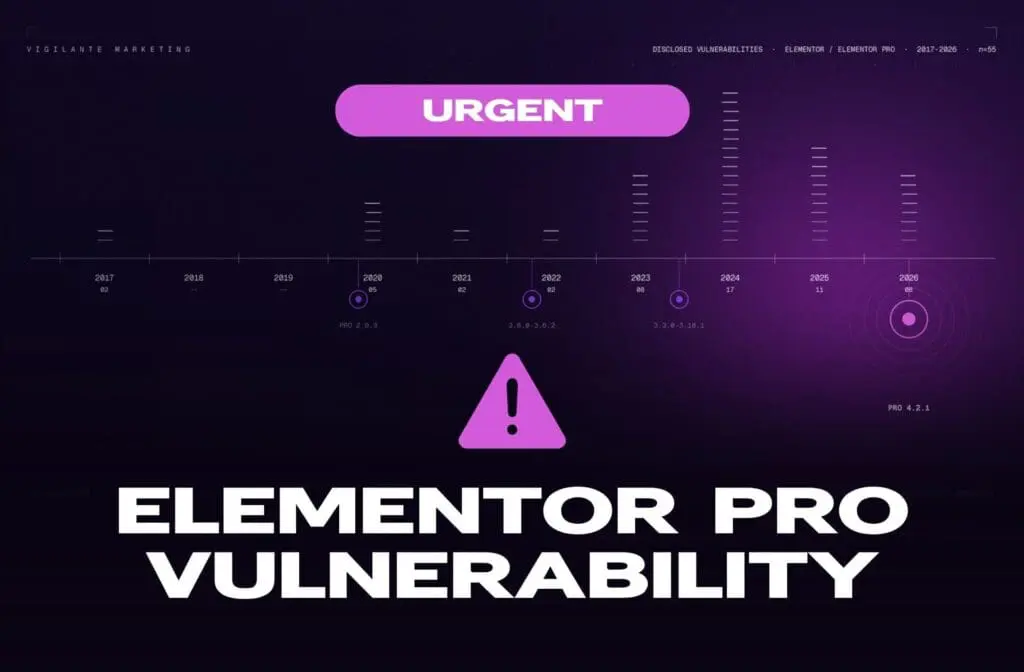
A critical flaw in Elementor Pro’s form feature (CVE-2026-32475) let attackers upload malicious files through a website form and take over the site. Elementor Pro is active on more than 6 million sites. The fix came out on August 19 (version 4.2.2), and Wordfence blocked nearly 200,000 attack attempts in the first five days alone. Sites that updated quickly were fine. Sites that didn’t were exposed.

WooCommerce stores and checkout skimming (May 2026)

For online stores, the stakes are higher. In May, attackers exploited a flaw in Funnel Builder, a popular WooCommerce checkout plugin used by 40,000+ stores. They injected hidden code into checkout pages, disguised as Google Tag Manager, that stole credit card numbers, CVVs and billing addresses from customers as they paid.

That’s why WordPress WooCommerce security needs its own attention. A hacked store doesn’t just mean downtime. It can mean stolen customer data, chargebacks, lost trust and possible legal problems.

The Most Common WordPress Security Issues

Most WordPress hacks come down to a handful of causes:

  • Outdated plugins and themes. The biggest risk by far. Every WordPress CVE (a publicly listed vulnerability) is a roadmap for attackers until you patch it.
  • Abandoned plugins. Patchstack found 46% of vulnerabilities were still unpatched when they were made public. If a plugin’s developer has moved on, a fix may never come.
  • Nulled or pirated plugins. “Free” versions of premium plugins often come with malware built in.
  • Weak logins. Reused passwords, no two-factor authentication and the default login page make brute-force attacks easy.
  • Too many plugins. Every plugin adds code, and every piece of code is another possible way in.
  • No monitoring. Many owners only find out they’ve been hacked when Google flags the site or customers complain.

How to Prevent WordPress Hacks: A Practical Checklist

Keep everything updated (fast)

WordPress security updates and security patches are your first line of defence. That includes WordPress core, every plugin, your theme and your PHP version. Given the 5-hour exploitation window, updates can’t wait for a quiet week. Critical patches should go on as soon as they’re released, after a quick check that nothing breaks.

Build on trusted, supported plugins

This is the part that gets overlooked. A site is only as secure as the plugins it’s built on. When choosing plugins, look for:

  • A strong track record and active development
  • Regular updates and fast responses to security reports
  • A reputable company or team behind it
  • Only the plugins you actually need

At Vigilante, we build sites on a curated stack of trusted plugins that are actively supported, so when a vulnerability is found, a patch follows quickly. If your site was built years ago on plugins that no longer get updates, patching alone may not be enough. Sometimes the safest, most cost-effective option is a rebuild on a modern, supported foundation.

Use a WordPress security plugin

A good WordPress security plugin adds the protection your host doesn’t. We use, a premium plugin (not a free one), Defender Pro in our stack, which includes:

  • WordPress malware scan: scheduled scans for malicious code, suspicious files, vulnerable plugins and changed core files
  • Firewall: blocks bad bots and malicious traffic before it reaches your site
  • Safe repair: restores clean WordPress core files in one click if they’ve been tampered with
  • Automated alerts and reports: so problems are caught early, not months later

Strengthen WordPress login security

WordPress login security stops a lot of attacks before they start:

  • Turn on two-factor authentication (2FA) for all admin users
  • Use strong, unique passwords and block known compromised passwords
  • Hide or change the default login URL
  • Limit login attempts to stop brute-force attacks
  • Give each user only the access they need

Harden WordPress

Hardening WordPress means closing the doors attackers commonly use:

  • Disable file editing from the WordPress dashboard
  • Remove unused plugins, themes and user accounts
  • Use SSL (HTTPS) across the whole site
  • Set correct file permissions
  • Keep regular, off-site backups you’ve tested restoring

Extra steps for WooCommerce stores

  • Use trusted, well-supported payment gateways
  • Keep checkout-related plugins especially current
  • Monitor checkout pages for unexpected scripts
  • Watch for unusual orders, admin users or settings changes

What to Do If Your WordPress Site Is Hacked

If you think your site has been compromised, act quickly:

  1. Don’t panic, but don’t wait. Put the site in maintenance mode if you can.
  2. Change all passwords: WordPress admins, hosting, FTP/SFTP and database.
  3. Run a full malware scan to find infected files.
  4. Handle WordPress malware removal carefully. Deleting one bad file often isn’t enough. Hackers usually leave backdoors to get back in.
  5. Find the entry point. Identify the vulnerable plugin, theme or login that let them in, and patch or replace it.
  6. Restore from a clean backup if one exists from before the hack.
  7. Request a review if Google has flagged the site.

To properly secure a WordPress site after a breach, you need to close the hole that let the attacker in. Otherwise, it’s common to be hacked again within days. If you’re not sure where to start, this is a good time to call in a professional.

Security Isn’t a One-Time Job

The biggest takeaway: WordPress security is ongoing. New vulnerabilities are found every week, and AI means attackers act faster than ever. A site that was secure last month can be at risk today.

That’s where Vigilante Marketing’s Site Support comes in. We keep your WordPress core, plugins and theme updated, run security scans and monitoring with Defender Pro, keep backups, and deal with issues before they turn into emergencies. You get to focus on your business while we keep your site secure.

And if your current site was built on outdated or unsupported plugins, we can talk about whether a fresh build on our trusted stack makes more sense than patching an old one.

Contact Vigilante Marketing to talk about website maintenance or a secure new build.

FAQ

Yes. WordPress core is very secure. Most WordPress security issues come from outdated or poorly supported plugins and themes, weak logins and missed updates.

Security updates and patches should go on as soon as possible, ideally within a day of release. Attackers often start exploiting new vulnerabilities within hours.

A CVE (Common Vulnerabilities and Exposures) is a public ID given to a known security flaw. When a WordPress plugin gets a CVE, attackers know exactly what to look for, so patching quickly matters.

Yes. Testing found hosting defences blocked only 12% to 26% of attacks on known WordPress vulnerabilities. A security plugin like Defender Pro adds malware scanning, a firewall and login protection.

Update them right away, remove any you don’t use, and replace plugins that are no longer maintained with actively supported alternatives.
VM Newsletter 1

The

Vigilante Voice

Newsletter Signup

The latest marketing news, promotions, and tips & tricks in our monthly newsletter

"*" indicates required fields

This field is for validation purposes and should be left unchanged.
Name*

Secret Link
SHARE YOUR CART